Artist's Diary
This blog has been set up to trace projects undertaken as a student of Bachelor of Visual Arts @ SCU, specialising in printmaking.
PRINTMAKING PROJECTS
Out of Site: Belongil
 Belongil 2014 – photopolymer etching; 28x40cm
Out of Site is a series of etchings derived from a site occupation, in this case Belongil beach. This etching is a collage of a number of shots of the beach dunes, overlaid with a marine chart.
 Belongil II 2014 – 3 colour photopolymer etching; 20x40cm
Second evolution of this print is a 3 colour posterised print exploring the same image.
 Belongil III 2014 – 3 colour photopolymer etching with blind embossing; 20x40cm
This third stage print attempts to bring more depth to the image and includes an overlay wave pattern made through blind embossing a fourth plate.
 Debris 2014 – 2 colour photopolymer etching; 6x40cm
Debris was collected from the site and detailed drawings made. The underlying plate is an ochre splatter, overlaid is a marine chart and collage of drawn studies of the material found.
 Tumbling 2014 – photopolymer etching; 28x28cm
Exploration of activity at the site, showing a photomontage of tumbling with background activity on the beach.
 Belongil Kite 2014 – copper plate etching; 28x40cm
First state of copper plate etching. Made by transferring inverted silkscreen image to copper plate via bitumen resist, then aquatinting/etching with ferric chloride. Original image has been bitmapped, texturising the print.
 Belongil Kite II 2014 – copper plate etching; 28x40cm
Second state of copper plate etching. A second photopolymer plate with surface flow pattern has been overlaid, on some plates as a dry embossing, on others as a translucent relief print.
 Dune Banskia 2014 – copper plate etching; 28x40cm
Copperplate drypoint etching overlaid with second photopolymer print.
Critique
Initially I focused on physical aspects of the site: its fragility and exposure. As the project evolved I became more interested in the role of the beach in the evolution of the Australian ethos.
Beaches mark the boundaries of our continent. From the convict perspective it was inescapable, for the refugee, it remains impenetrable. For the Indigenous population, beach is country, intrinsic to identity and culture, but also the site of European invasion.
The bush gained significance early in the history of settlement. Writers and artists were crucial in constructing 'outback' life as the quintessence of Australianness. The beach emerged as a cultural site in the 20th century. Here people led the way and the arts followed. Brian Matthews concludes that the trouble with beach versus bush legend is that beach life is primarily recreational, in contrast to the sheer hard work required for survival in the bush.
However, this doesn't reflect the beach's deeper reality as a place conducive to apprehension of the transcendent. Brewster calls it "a zone in which different temporalities conjoin" – in accord with Indigenous recognition of the cyclical nature of existence. Huntsman suggests that a culture reverberates to aspects of the natural environment in which it is set.
The Japanese aesthetic of wabi-sabi eloquently expresses how I see my site. It's characterised by simplicity, appreciation of the beauty and integrity of natural forms and processes, recognition of the unique character brought through quirks and anomalies of imperfection, and by acceptance of transience.
Bibliography
Leonie Huntsman, Sand in Our Souls (Melbourne: Melbourne University Press, 2001).
Anne Brewster, "The beach as Dreaming Place", New Literatures Review, No. 40 (Winter 2003) 33-41.
Elizabeth Ellison, "Flagging Spaces: exploring the myth of the Australian beach as an egalitarian space", Ignite 10! Conference (Brisbane: QUT, 2010).
Brian Matthews, "The Nation Needs New Urban Myths", Australian (8 October 1997) 15.
Altered Book Project: Onnade
 Onnade 2014 – altered book during construction
 Onnade 2014 – altered book in Rebound exhibition, rice paper, bamboo, spinners, keyrings
 Onnade 2014 – altered book endpiece, rice paper, bamboo, spinners, keyrings
Onnade (women's hand) traces the ancient phonetic syllabary of Hirigana, first popularised by Japanese women in the 9th century as they covertly sought access to literate arts. The calligraphic marks draw an intuitive responsive, even if indecipherable. The simplified cursive characters are inherently feminine, each representing one syllable. Embedded within the carved forms are vestiges of the original graphic annual, referencing both eastern and western cultures.
The wave-form installation pays homage to Xu Bing's Book from the Sky, composed entirely of invented characters, a commentary on political subversion of the written word in modern China. Philippa Mules has observed that books 'not only controlled how knowledge was accessed, stored and disseminated, but also exerted a powerful unconscious influence over our perceptions...'1 How then does the emerging prevalence of virtual media reshape our ideas and beliefs?
1 Philippa Mules, "Textbooks: Changing Materiality, Changing Meaning", International Journal of the Book, Vol. i Issue 3 (2011, p147-155).
Out of Site is a series of etchings derived from a site occupation, in this case Belongil beach. This etching is a collage of a number of shots of the beach dunes, overlaid with a marine chart.
Belongil II 2014 – 3 colour photopolymer etching; 20x40cm
Second evolution of this print is a 3 colour posterised print exploring the same image.
Belongil III 2014 – 3 colour photopolymer etching with blind embossing; 20x40cm
This third stage print attempts to bring more depth to the image and includes an overlay wave pattern made through blind embossing a fourth plate.
Debris 2014 – 2 colour photopolymer etching; 6x40cm
Debris was collected from the site and detailed drawings made. The underlying plate is an ochre splatter, overlaid is a marine chart and collage of drawn studies of the material found.
Tumbling 2014 – photopolymer etching; 28x28cm
Exploration of activity at the site, showing a photomontage of tumbling with background activity on the beach.
Belongil Kite 2014 – copper plate etching; 28x40cm
First state of copper plate etching. Made by transferring inverted silkscreen image to copper plate via bitumen resist, then aquatinting/etching with ferric chloride. Original image has been bitmapped, texturising the print.
Belongil Kite II 2014 – copper plate etching; 28x40cm
Second state of copper plate etching. A second photopolymer plate with surface flow pattern has been overlaid, on some plates as a dry embossing, on others as a translucent relief print.
Dune Banskia 2014 – copper plate etching; 28x40cm
Copperplate drypoint etching overlaid with second photopolymer print.
Beaches mark the boundaries of our continent. From the convict perspective it was inescapable, for the refugee, it remains impenetrable. For the Indigenous population, beach is country, intrinsic to identity and culture, but also the site of European invasion.
The bush gained significance early in the history of settlement. Writers and artists were crucial in constructing 'outback' life as the quintessence of Australianness. The beach emerged as a cultural site in the 20th century. Here people led the way and the arts followed. Brian Matthews concludes that the trouble with beach versus bush legend is that beach life is primarily recreational, in contrast to the sheer hard work required for survival in the bush.
However, this doesn't reflect the beach's deeper reality as a place conducive to apprehension of the transcendent. Brewster calls it "a zone in which different temporalities conjoin" – in accord with Indigenous recognition of the cyclical nature of existence. Huntsman suggests that a culture reverberates to aspects of the natural environment in which it is set.
The Japanese aesthetic of wabi-sabi eloquently expresses how I see my site. It's characterised by simplicity, appreciation of the beauty and integrity of natural forms and processes, recognition of the unique character brought through quirks and anomalies of imperfection, and by acceptance of transience.
Bibliography
Leonie Huntsman, Sand in Our Souls (Melbourne: Melbourne University Press, 2001).
Anne Brewster, "The beach as Dreaming Place", New Literatures Review, No. 40 (Winter 2003) 33-41.
Elizabeth Ellison, "Flagging Spaces: exploring the myth of the Australian beach as an egalitarian space", Ignite 10! Conference (Brisbane: QUT, 2010).
Brian Matthews, "The Nation Needs New Urban Myths", Australian (8 October 1997) 15.
Critique
Initially I focused on physical aspects of the site: its fragility and exposure. As the project evolved I became more interested in the role of the beach in the evolution of the Australian ethos.Beaches mark the boundaries of our continent. From the convict perspective it was inescapable, for the refugee, it remains impenetrable. For the Indigenous population, beach is country, intrinsic to identity and culture, but also the site of European invasion.
The bush gained significance early in the history of settlement. Writers and artists were crucial in constructing 'outback' life as the quintessence of Australianness. The beach emerged as a cultural site in the 20th century. Here people led the way and the arts followed. Brian Matthews concludes that the trouble with beach versus bush legend is that beach life is primarily recreational, in contrast to the sheer hard work required for survival in the bush.
However, this doesn't reflect the beach's deeper reality as a place conducive to apprehension of the transcendent. Brewster calls it "a zone in which different temporalities conjoin" – in accord with Indigenous recognition of the cyclical nature of existence. Huntsman suggests that a culture reverberates to aspects of the natural environment in which it is set.
The Japanese aesthetic of wabi-sabi eloquently expresses how I see my site. It's characterised by simplicity, appreciation of the beauty and integrity of natural forms and processes, recognition of the unique character brought through quirks and anomalies of imperfection, and by acceptance of transience.
Bibliography
Leonie Huntsman, Sand in Our Souls (Melbourne: Melbourne University Press, 2001).
Anne Brewster, "The beach as Dreaming Place", New Literatures Review, No. 40 (Winter 2003) 33-41.
Elizabeth Ellison, "Flagging Spaces: exploring the myth of the Australian beach as an egalitarian space", Ignite 10! Conference (Brisbane: QUT, 2010).
Brian Matthews, "The Nation Needs New Urban Myths", Australian (8 October 1997) 15.
Altered Book Project: Onnade
Onnade 2014 – altered book during construction
Onnade 2014 – altered book in Rebound exhibition, rice paper, bamboo, spinners, keyrings
Onnade 2014 – altered book endpiece, rice paper, bamboo, spinners, keyrings
Onnade (women's hand) traces the ancient phonetic syllabary of Hirigana, first popularised by Japanese women in the 9th century as they covertly sought access to literate arts. The calligraphic marks draw an intuitive responsive, even if indecipherable. The simplified cursive characters are inherently feminine, each representing one syllable. Embedded within the carved forms are vestiges of the original graphic annual, referencing both eastern and western cultures.
The wave-form installation pays homage to Xu Bing's Book from the Sky, composed entirely of invented characters, a commentary on political subversion of the written word in modern China. Philippa Mules has observed that books 'not only controlled how knowledge was accessed, stored and disseminated, but also exerted a powerful unconscious influence over our perceptions...'1 How then does the emerging prevalence of virtual media reshape our ideas and beliefs?
The wave-form installation pays homage to Xu Bing's Book from the Sky, composed entirely of invented characters, a commentary on political subversion of the written word in modern China. Philippa Mules has observed that books 'not only controlled how knowledge was accessed, stored and disseminated, but also exerted a powerful unconscious influence over our perceptions...'1 How then does the emerging prevalence of virtual media reshape our ideas and beliefs?
1 Philippa Mules, "Textbooks: Changing Materiality, Changing Meaning", International Journal of the Book, Vol. i Issue 3 (2011, p147-155).
DESIGN PROJECTS
Option B Dad

Option B Dad
Opening credit
My object of memory is a passport photo of my Dad. At the moment it's not here, so I am imagining. I'm thinking of the era in which he lived, of looking through his eyes at a world in the grip of momentous changes.
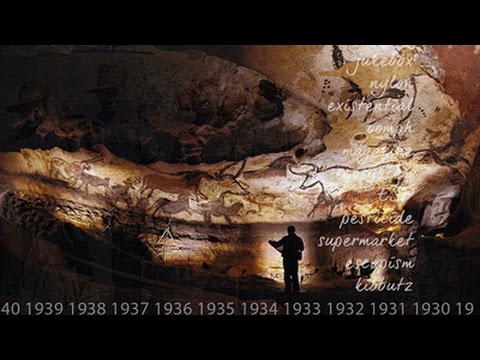
Below is my video (in progress) compressing 75 years of Dad's experience into one minute. John Stezaker was a major influence with his rapid fire vintage imagery. There are 4 to 5 images for every year of his life and the scrolling words show new words adopted into the English language at that time, reflecting its ongoing transformation (with thanks to David Astle and his great book Cluetopia). Music rights courtesy of www.melodyloops.com. The sound track is African Tribal Journey by Geoff Harvey.
DADanimationMUSIC - YouTube
DAD is part of a Design project done as student of Visual Arts at Southern Cross University, Australia. The British artist John Stezaker inspired this video,...
<iframe width="853" height="480" src="//www.youtube.com/embed/JmTwxCh5IZs?rel=0" frameborder="0" allowfullscreen></iframe>
My object of memory is a passport photo of my Dad. At the moment it's not here, so I am imagining. I'm thinking of the era in which he lived, of looking through his eyes at a world in the grip of momentous changes.
Below is my video (in progress) compressing 75 years of Dad's experience into one minute. John Stezaker was a major influence with his rapid fire vintage imagery. There are 4 to 5 images for every year of his life and the scrolling words show new words adopted into the English language at that time, reflecting its ongoing transformation (with thanks to David Astle and his great book Cluetopia). Music rights courtesy of www.melodyloops.com. The sound track is African Tribal Journey by Geoff Harvey.
Below is my video (in progress) compressing 75 years of Dad's experience into one minute. John Stezaker was a major influence with his rapid fire vintage imagery. There are 4 to 5 images for every year of his life and the scrolling words show new words adopted into the English language at that time, reflecting its ongoing transformation (with thanks to David Astle and his great book Cluetopia). Music rights courtesy of www.melodyloops.com. The sound track is African Tribal Journey by Geoff Harvey.
DADanimationMUSIC - YouTube
DAD is part of a Design project done as student of Visual Arts at Southern Cross University, Australia. The British artist John Stezaker inspired this video,...
|
<iframe width="853" height="480" src="//www.youtube.com/embed/JmTwxCh5IZs?rel=0" frameborder="0" allowfullscreen></iframe>

No comments:
Post a Comment